Hand wash vs tunnel wash: what really happens to dark paint
Swirl marks are not a mystery. Here is where they come from, why black cars show them first and how to keep them off your paint.
If you have ever pulled a black or dark gray car into direct sunlight and noticed a fine web of circular scratches, you have met swirl marks. They are the single most common complaint we hear from new members, and in almost every case the owner has been using an automatic tunnel wash for convenience. That is not a knock on tunnels. They are fast, cheap and fine for many cars. But it is worth understanding what is physically happening to your clear coat so you can decide what is right for your car.
Where swirl marks actually come from
Your car's paint is protected by a clear coat that is roughly the thickness of a sticky note. Anything harder than that surface, dragged across it, leaves a scratch. Most swirls are not made by the brush or cloth material itself. They are made by grit trapped in that material: sand from a gravel driveway, road grime from I-40, dried mud from the last car that went through.
A tunnel's brushes or cloth strips clean hundreds of vehicles a day. Even with rinse cycles, some of that grit stays embedded and gets pressed against every car that follows. Each pass creates thousands of micro-scratches that scatter light. On white or silver paint you barely notice. On black, deep blue or dark red, they show up as a hazy spider web the moment the sun hits.
How a proper hand wash is different
A careful hand wash attacks the same problem from three angles: remove as much grit as possible before touching the paint, use a clean tool for every car, and keep the dirt that comes off from going back on.
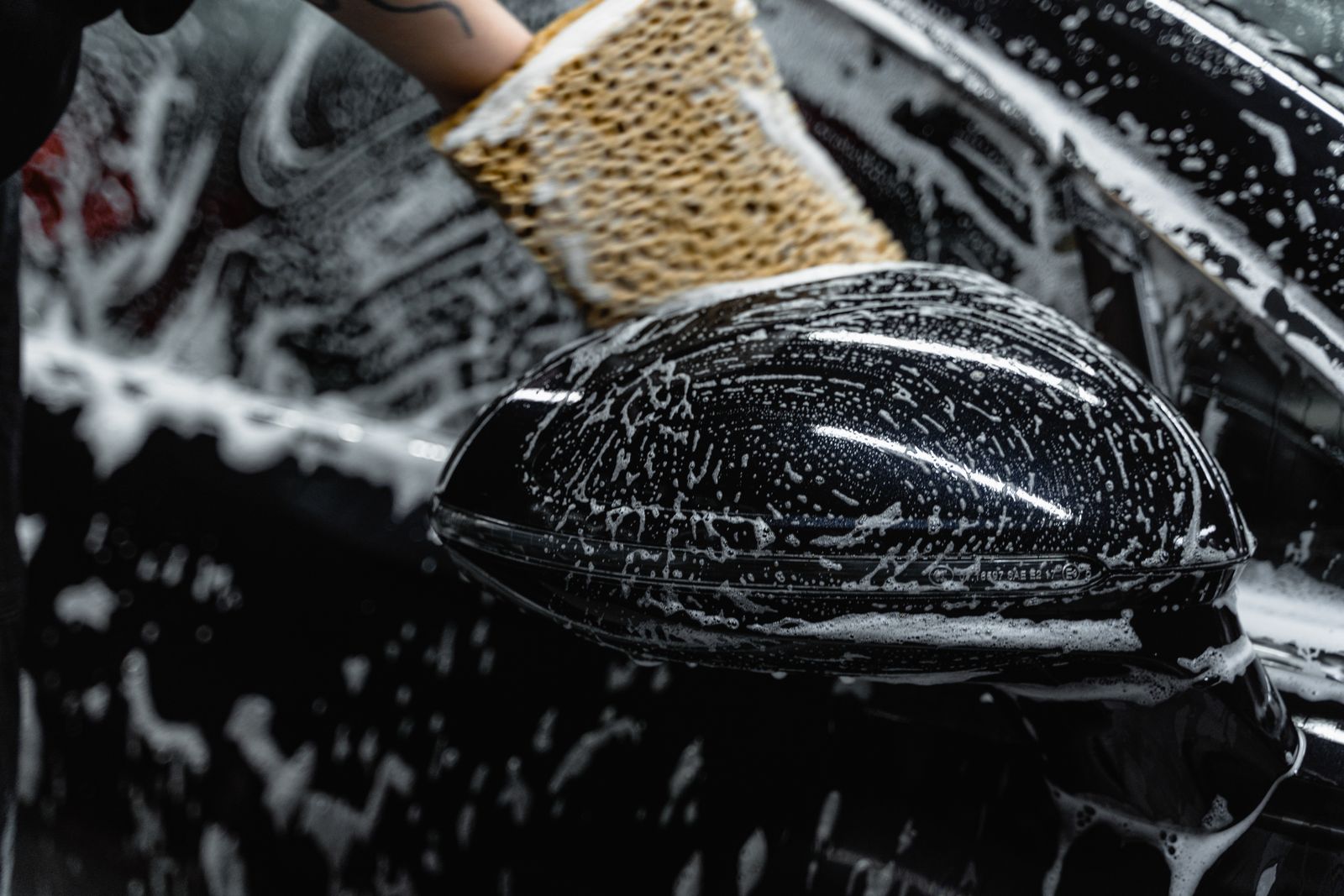
- Pre-soak and rinse. Thick snow foam dwells on the car for a few minutes and softens bonded dirt, then a rinse carries away most of the loose grit before any mitt touches the surface.
- Two buckets with grit guards. One bucket holds soapy water, the other holds clean rinse water. The mitt is rinsed after every panel so grit sinks to the bottom of the rinse bucket rather than returning to the paint.
- Top-down, separate tools for the bottom. Lower sills and wheels are the dirtiest parts of any car, so they get their own mitts and brushes.
- Gentle drying. Warm filtered air removes most of the water, and plush microfiber finishes the job without dragging.
Is a touchless tunnel the answer?
Touchless tunnels avoid brushes entirely, which does reduce swirl risk. The tradeoff is chemistry. Without agitation, they rely on high-pH detergents to break down road film, and those strong cleaners can strip waxes and sealants over time. They also tend to leave a thin traffic film behind, which you can see when you wipe a finger across the lower door.
For a daily driver in a light color, a touchless wash between hand washes is a reasonable compromise. For a dark car you care about, or any car with a ceramic coating, we suggest sticking with pH-neutral products and hand agitation.
Can existing swirl marks be removed?
Light swirls live in the top fraction of the clear coat and can usually be reduced with machine polishing. Our Showroom Reset includes a one-step polish that removes light wash marring and brings back sharp reflections. Deeper scratches, the kind your fingernail catches on, need multi-step paint correction or touch-up paint.
The better long-term plan is prevention. Once paint is corrected, a consistent hand wash routine and a ceramic sealant layer keep it looking that way for years rather than weeks.
A simple routine for dark cars in Nashville
- Hand wash every one to two weeks, more often during spring pollen season.
- Add a ceramic sealant every three months, or join a plan that includes it.
- Remove bird droppings and bug splatter within a day, before summer heat bakes them in.
- Park in shade or a garage when possible to slow UV damage to both paint and trim.
None of this requires obsessive effort. It just requires that the tools touching your car are clean. That is the whole idea behind Gleam Garage, and it is why we have never installed a brush in any of our bays.
Want us to handle it?
Every Gleam Garage visit starts with a paint-safe two-bucket hand wash. Walk in or reserve a bay.